
Sending a Replacement to Mars Is a Bad Business Case
What space exploration can teach industry about reliability, autonomy and long-term asset performance
When downtime is more than a cost issue
In most industries, downtime is expensive. In space exploration, downtime can be existential.
That difference changes everything. When a critical component fails on Earth, we can often send a technician, ship a spare part, revise the maintenance plan or redesign the system for the next production cycle. But when the asset is orbiting Earth, operating on the Moon, or travelling towards Mars, maintenance becomes a radically different challenge.
Distance, time, harsh environments and limited resupply opportunities turn reliability from an operational objective into a survival requirement.
This is the central idea behind Stefaan De Mey’s keynote at the Asset Performance Conference 2026: “Sending a Replacement to Mars Is a Bad Business Case.”
Europe’s ambition in space exploration
As Head of the Strategy Team for Human and Robotic Exploration at the European Space Agency, Stefaan De Mey takes the audience beyond the boundaries of conventional industry and into the strategic reality of European space exploration.
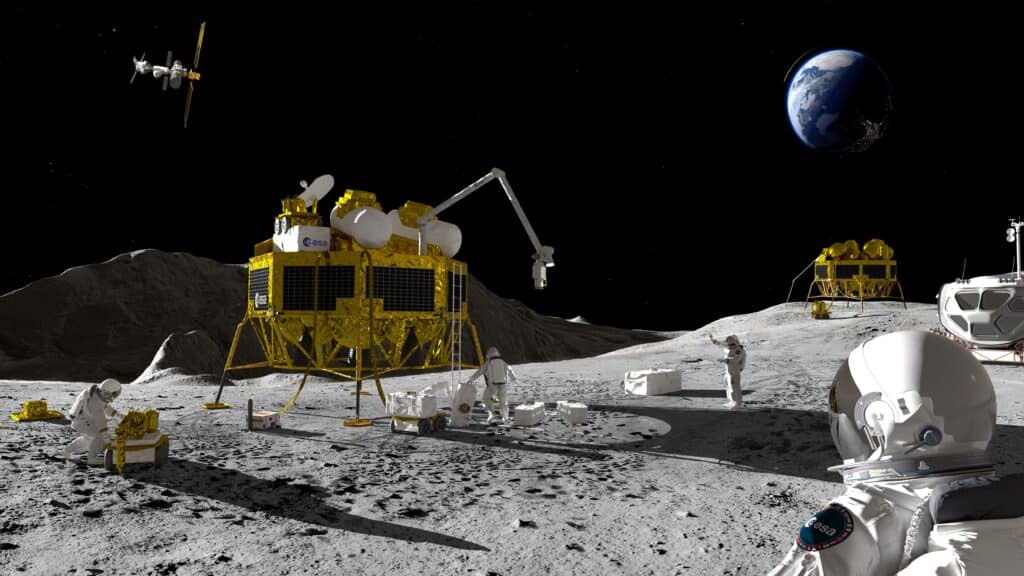
His keynote introduces Terrae Novae, ESA’s European exploration programme spanning low Earth orbit, the Moon and Mars. The programme reflects Europe’s ambition to extend human presence steadily farther into the solar system, while developing the systems, technologies and partnerships needed to make that ambition sustainable.
This is not only a story about rockets, astronauts and distant planets. It is also a story about engineering discipline, long-term thinking and the ability to design systems that continue to perform when easy intervention is no longer possible.
Reliability at extreme distance
Space exploration confronts many of the same questions that asset-intensive industries face today, but under far more extreme conditions.
How do we design systems that continue to perform when maintenance is difficult, expensive or impossible? How do we combine human expertise with robotics and autonomy? How can simulation, digital engineering and digital twins reduce uncertainty before assets are deployed? How do we manage lifecycle performance when assets must operate for years in unpredictable environments?
In space, these questions are not theoretical. When the next resupply window is measured in years, or planets, every design decision matters.
The Moon and Mars are therefore more than destinations. They are test environments for a new way of thinking about assets, missions and long-term performance.
Robots, astronauts and autonomous systems
The keynote will explore the strategic challenge of exploration at distance: sending robots, humans, or both together into extreme environments where reliability, longevity and sustainability are essential.
Robotic systems can go where humans cannot yet safely operate. Astronauts bring judgement, adaptability and experience. The future of exploration will increasingly depend on how these capabilities are combined.
For industry, this raises highly relevant questions. What tasks should be automated? Where is human intervention still essential? How can autonomous systems support safer, smarter and more resilient operations? And how can organisations build trust in technologies that must perform reliably under complex conditions?
These are questions that resonate far beyond space exploration.
A renewed race to the Moon and Mars
Stefaan also places Europe’s ambitions within a rapidly evolving global context.
A renewed international race to the Moon and Mars is reshaping priorities worldwide. Space agencies, governments and private companies are investing in new capabilities, new partnerships and new technologies. The objective is no longer only to visit space, but to operate there sustainably.
For Europe, this creates both opportunities and strategic responsibilities. Autonomy, resilience, sustainability and international collaboration are becoming decisive factors in the next phase of exploration.
This broader perspective gives the keynote a strong strategic dimension. It connects engineering challenges with geopolitical realities, long-term capability building and Europe’s role in an increasingly competitive global landscape.
What industry can learn from space
For the Asset Performance Conference audience, the value of this keynote lies in the bridge between space and Earth.
Technologies developed for space often begin as solutions to extreme constraints: limited mass, limited energy, long distances, harsh operating conditions and almost no margin for unscheduled maintenance. Yet the thinking behind them is increasingly relevant to sectors such as energy, chemicals, food production, infrastructure, transport and heavy industry.
These industries also depend on complex assets operating safely, efficiently and reliably over long periods of time. They too are looking for smarter ways to predict degradation, optimise maintenance, extend asset life, reduce risk and make better decisions under uncertainty.
Space exploration forces engineers and strategists to think differently. A spare part is not simply a logistics item. A maintenance concept is not merely an operational procedure. A design decision is not just a technical preference. Every choice has consequences across the entire lifecycle of the mission.
From replacement thinking to lifecycle thinking
That is why the keynote title resonates so strongly: sending a replacement to Mars is a bad business case.
It is also a powerful reminder for industry. The further away an asset is from easy intervention, the more valuable it becomes to design for reliability, autonomy and lifecycle performance from the start.
For maintenance and reliability leaders, this keynote offers inspiration on how to move from reactive intervention to built-in resilience. For asset managers, it highlights the importance of lifecycle thinking when assets must perform over long time horizons. For digital transformation leaders, it connects space exploration with simulation, autonomy, digital engineering and data-driven decision-making. For executives, it frames reliability and sustainability as strategic capabilities, not just technical concerns.
From Antwerp to Mars, a keynote designed to inspire
This evening keynote offers a high-level, narrative-driven perspective, with examples from ESA’s human and robotic exploration activities, and reflections on astronaut training, space stations, lunar missions and Mars ambitions. The session will not be a technical deep dive into one specific technology. Instead, it will invite participants to step back and look at asset performance through a different lens.
What can industrial organisations learn from mission planning in space? How can extreme environments sharpen our thinking about reliability? What role will robotics and human-machine collaboration play in the future of maintenance? And how can long-term sustainability become a design principle rather than an afterthought?
Ultimately, this keynote is about more than space. It is about the future of performance in any environment where assets matter, intervention is costly and failure has consequences.
On Wednesday evening, 18 November 2026, Stefaan De Mey brings the audience from Antwerp to low Earth orbit, the Moon and Mars — and back again to the industrial challenges we face here on Earth.
Because whether you are managing a production line, an offshore installation, a transport network or a mission beyond our planet, one principle remains the same:
The best replacement strategy is designing systems that do not need one.