
From Knowledge at Risk to AI at Work
How generative and agentic AI are entering the maintenance organisation
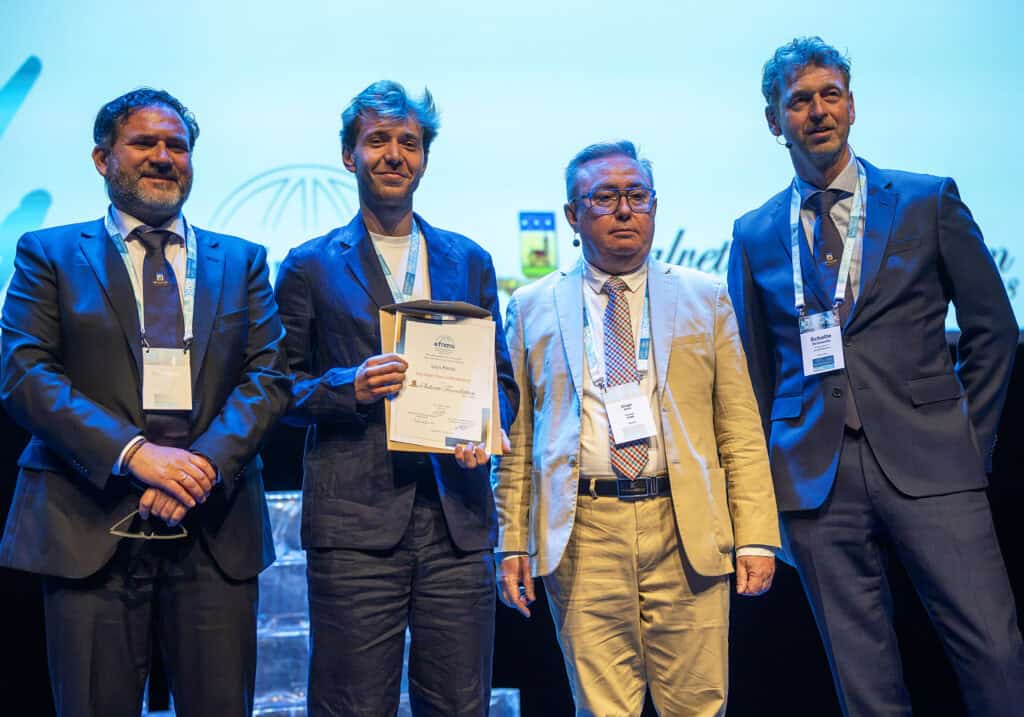
When Louis Morias received the European Master Thesis Award, from the Salvetti Foundation and EFNMS, the recognition went beyond a milestone. Nominated by BEMAS, he became the European laureate with a thesis addressing an urgent maintenance question: how can industrial organisations use generative AI to secure and activate technical knowledge?
“I felt very honoured,” Louis says. “But the award also showed that the topic of my thesis resonates in society. Generative AI is not a small or temporary subject. It is part of a broad evolution that we are all going through.”
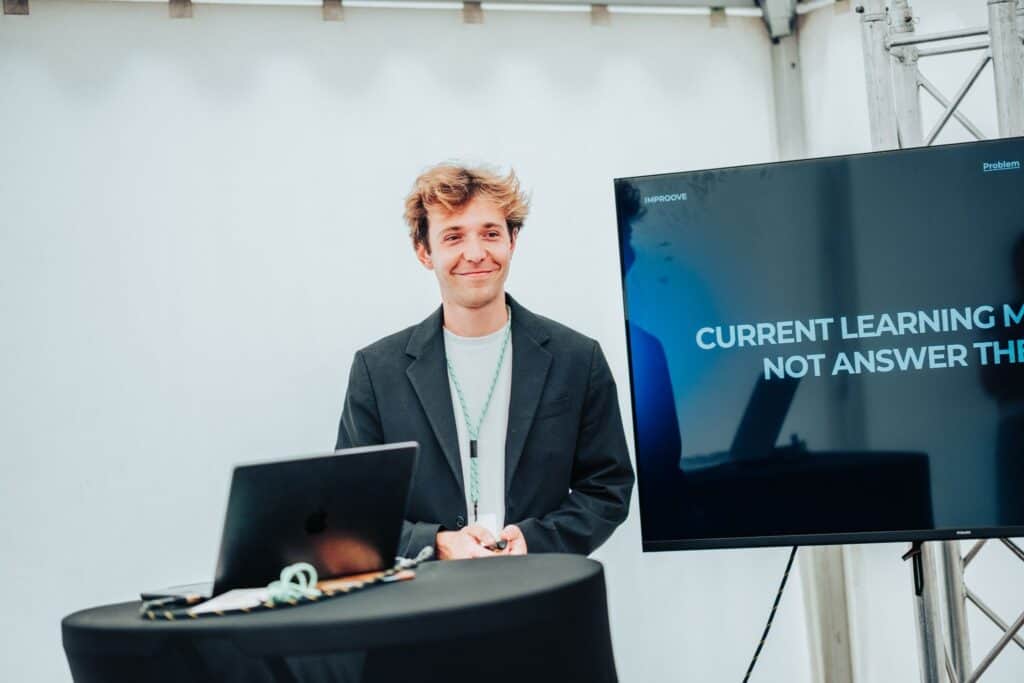
His research focused on generative AI in maintenance. The issue goes beyond ChatGPT: how can organisations preserve decades of experience, make it accessible to younger technicians and use AI without compromising safety or trust?
At the Asset Performance Conference, Louis will explain why the next wave of AI will retrieve information, analyse context and prepare actions. The focus is shifting from generative to agentic AI.
From Formula Student to maintenance
Louis studied business engineering and joined the UGent Racing Team, which builds a self-driving electric Formula Student car. As part of the management team, he worked on finance, partnerships, marketing and strategy. Although his role was mainly non-technical, the environment brought him closer to engineering and innovation.
That experience led him to the Master in Smart Operations and Maintenance in Industry, organised by KU Leuven and Ghent University, where he studied AI in maintenance.
“There was little clarity on how far companies really were,” Louis says. “Often it was seen as a marketing tool. We wanted to know what was actually happening in production environments.”
A natural fit for AI
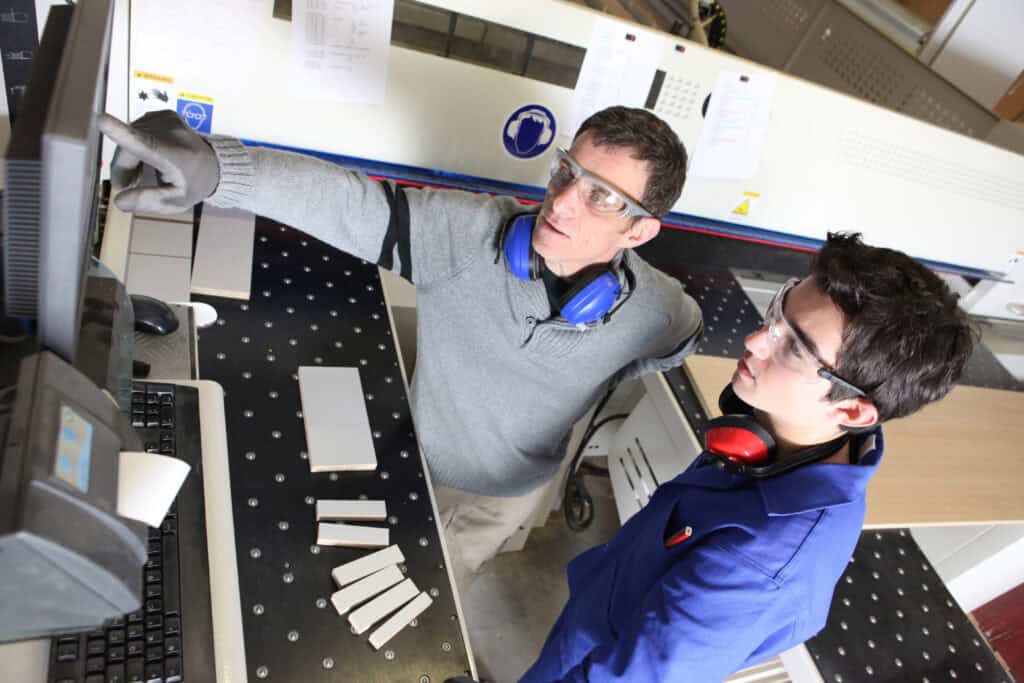
Maintenance is knowledge-intensive and text-heavy. Work orders, inspection reports, manuals, procedures, shift handovers and troubleshooting notes contain valuable information, much of it scattered across documents and systems.
Organisations also depend on experienced people who know how the work is really done. Ageing workforces put that knowledge at risk, while new technicians need faster access to expertise that took colleagues decades to build.
“Knowledge retention is becoming more difficult,” Louis says. “Generative AI can help capture that knowledge and make it accessible in another way to new people entering the workplace.”
Faster access to the right information can shorten troubleshooting, improve first-time-right interventions and reduce dependence on a few experts—important amid technical labour shortages.
Adoption is growing, but still early
Louis’ research, conducted in 2024 and 2025, showed that adoption in maintenance remained at an early stage. Many professionals had experimented with ChatGPT, Gemini or Copilot, but daily operational use was far less common.
Service providers appeared more willing to explore AI to improve efficiency and customer value. Internal maintenance teams were more cautious, focused on keeping assets running and solving breakdowns.
“The adoption was lower than you might expect,” Louis says. “Many people had experimented with it, but when you asked whether they used generative AI every day in their work, the answer was almost always no.”
The conclusion is that organisations need concrete use cases embedded in real maintenance workflows.
Making documentation usable again
One of the clearest applications is access to technical documentation. Industrial organisations have enormous amounts of information spread across systems, manuals, PDFs and historical reports. Finding the relevant answer can still take too long.
Louis points to Retrieval-Augmented Generation, or RAG. In a RAG setup, an AI model is connected to approved internal documentation. When a technician asks a question, the system first retrieves relevant information. Only then does the model formulate an answer.
A general AI model does not know the details of a specific machine or procedure. It may sound fluent, but fluency is not reliability.
“If you ask a question about machine X, the system should first search the documentation you have about that machine,” Louis explains. “It retrieves the relevant information, formulates a clear answer and shows where it came from.”
In maintenance, trust depends on traceability. A technician must be able to verify the source, especially for safety or critical equipment.
Safe AI starts with governance
Generative AI raises difficult questions: where does company data go, which documents may be used and how can confidential information and reliability be protected?
Louis argues that AI needs appropriate guardrails. RAG can lower risk by grounding answers in internal sources, but human checks remain necessary.
“An AI model remains probabilistic,” he says. “If you use AI in critical processes, you need checks. For critical information there must always be verification.”
Companies may use a trusted vendor’s secure ecosystem or prefer locally hosted systems for sensitive production data. For Louis, this is not a reason to avoid experimentation, but to experiment properly, with clear boundaries between AI support and human responsibility.
Start with the workflow, not the tool
If Louis managed maintenance on an industrial site today, he would start close to the shop floor, with documentation and existing work practices—not a large transformation programme.
“The first step is to digitalise your documentation,” he says. “Then look at how much is already available digitally and how your technicians work today.”
AI should not force technicians into a new process created around a tool. It should reinforce the workflow they already use.
“The goal is not to build a workflow around AI,” Louis says. “The goal is to integrate AI into the existing workflow.”
Adoption should begin with real pain points: repetitive reporting, hard-to-find documents, language barriers, knowledge loss or time-consuming preparation. Technology fails when it adds friction to field work.
From generative to agentic AI
Since Louis completed his thesis, attention has shifted towards agentic AI. Where generative AI mainly formulates answers, an AI agent can use tools and perform actions within predefined boundaries.
“The major difference is that an agent has tools to execute actions,” Louis says. “But you have to define very carefully which permissions you give.”
In maintenance, an agent could collect sensor data, review work orders and earlier interventions, and prepare a preliminary root cause analysis.
“When the technician arrives, he already has a first analysis,” Louis says. “The agent has retrieved data, looked for connections and suggested what may be happening. I do not think this is science fiction anymore.”
The point is not to replace the technician, but to make that person better prepared. Reducing time spent searching and reconstructing context can improve reliability and productivity.
The all-knowing operator
Almost every industrial site has an experienced operator who knows the installation’s history, remembers earlier failures and often senses what is wrong before others find the data. Louis calls this person the “all-knowing operator”.
“Many companies recognise that one operator who has been there for thirty years,” he says. “Someone who saw the installation being built and almost instinctively knows where the problem is.”
That knowledge is a strong but fragile asset. When experienced people retire, it often leaves with them. Manuals and work orders rarely capture the full reasoning behind decisions.
“You want to internalise that knowledge as a company,” Louis says. “You do not want it all to disappear when someone retires.”
AI cannot replace experience, but it can help capture fragments of knowledge, connect them to documentation and make them reusable.
Experiment, but keep people in control
Looking three to five years ahead, Louis expects wider adoption, but not uncontrolled automation. Wrong decisions can cause downtime, safety incidents or environmental impact.
“You do not want AI to autonomously make decisions that could stop a factory,” he says. “I mainly see human-in-the-loop assistance: the technician remains responsible, but has a digital assistant that brings the right knowledge at the right time.”
His advice is direct: start experimenting. Identify repetitive tasks, test tools, launch focused pilots and involve people who understand the work.
The discussion is moving beyond hype. The question is whether AI can improve maintenance safely and usefully.
At the Asset Performance Conference, Louis will show where the technology stands, which barriers remain and how organisations can take their first steps. His message is pragmatic: AI will change maintenance, but the strongest results will come from combining digital intelligence with human expertise.